SWRO on Harapan Island Becomes a Solution for Providing Clean Water
Reported by Anita Karyati | Translated by Rizky Mawardi
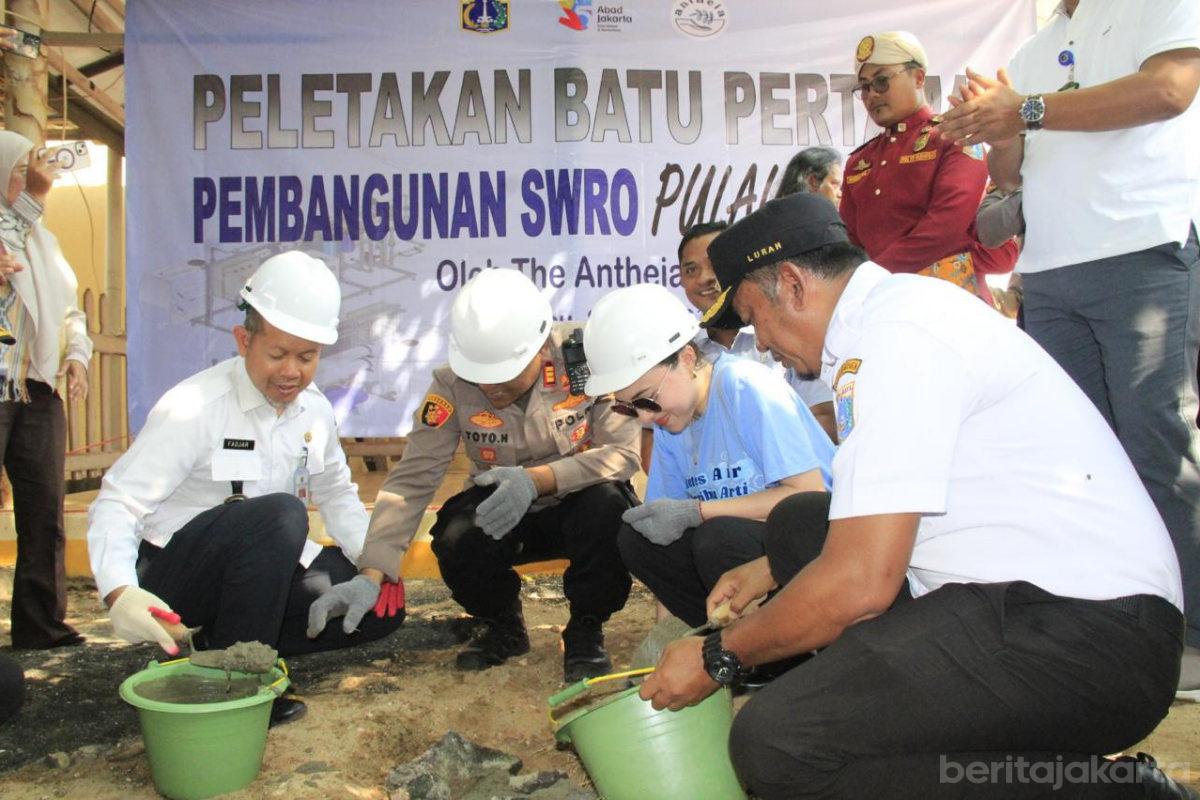
The Regent of the Seribu Islands, Muhammad Fadjar Churniawan, laid the first stone or groundbreaking for the construction of the Sea Water Reverse Osmosis (SWRO) facility in the Integrated Park, Harapan Island, Seribu Utara Islands District.
Creativity and collaboration with various parties
The construction of the seawater treatment facility into clean water is the result of a collaboration between the Seribu Islands Regency Government and The Antheia Project. This facility is expected to provide a solution to meet the community's need for clean, potable water, particularly for residents of Harapan Island.
DPRD Chair Backs Clean Water Project, Stresses Public SafetyAccording to him, innovation in processing seawater into clean water is very important to increase regional independence in meeting the basic needs of the community.
"In accordance with the Governor's direction, development does not only rely on the Regional Budget, but also requires creativity and collaboration with various parties," he said, Wednesday (7/29).
Fadjar explained that although the Seribu Islands region is surrounded by abundant raw water sources, the availability of clean, drinkable water remains a challenge. This situation is exacerbated during the dry season or when the region is affected by the El Niño phenomenon.
"We hope that this development can be sustainable and maintained together," he hoped.
Meanwhile, Co-Founder and CEO of The Antheia Project, Ruhani Nitiyudo, said that his organization has been committed to promoting various sustainable actions that have a positive impact on environmental, social, and economic aspects since the organization was founded in 2020.
He added that before the construction of the SWRO facility began, The Antheia Project had distributed around 10,000 gallons of clean water to the people of the Seribu Islands.
The construction of the SWRO on Harapan Island is expected to be a concrete step in providing access to clean water that can be utilized by the community in the long term.
"We don't just want to run a one-time project, but ensure this movement is sustainable," he hoped.